Wandercraft
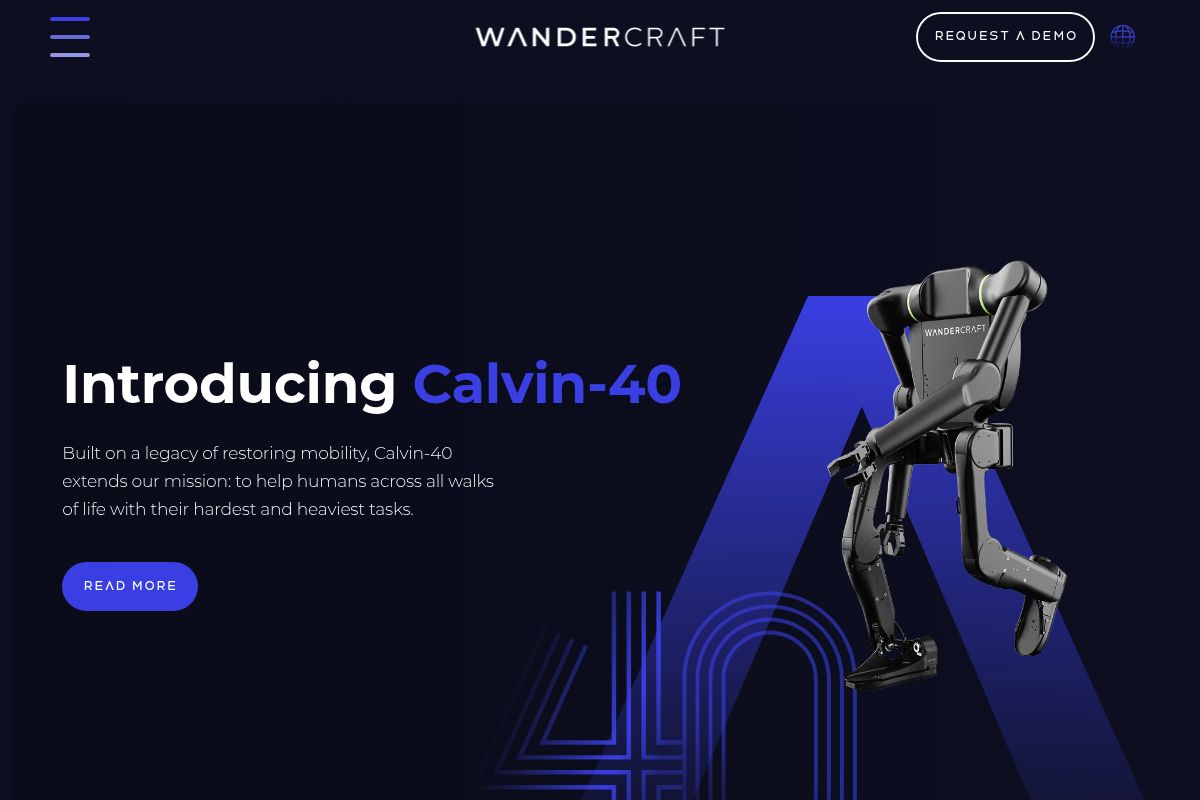
Wandercraft develops AI-powered personal exoskeletons and mobility solutions to help humans perform heavy tasks and restore movement.
Classification
Profile
Funding
Compliance
Signals
Fundraising & market
Enabling free movement through AI-driven personal exoskeletons like Calvin-40 and dedicated Walk Centers, restoring mobility for diverse user needs.
Individuals requiring mobility restoration, patients needing rehabilitation, and users seeking assistance with heavy or difficult physical tasks.
Direct sales of hardware (exoskeletons) and service fees for physical therapy or mobility assistance at dedicated Walk Centers.
Direct-to-consumer sales via website, strategic launch partnerships (e.g., Groupe Renault), and physical Walk Center locations.
Groupe Renault for product launch and distribution; potential healthcare providers for Walk Center integration.
High R&D for AI robotics and hardware engineering, patent maintenance, and operational costs for physical Walk Center facilities.
Proprietary AI algorithms, over 30 patents, engineering expertise in robotics, and physical infrastructure like the Walk in New York center.
Developing AI-powered mobility robotics, manufacturing exoskeletons, operating Walk Centers, and securing regulatory approvals.
Direct engagement through physical centers and product launches; mission-driven community building around mobility and independence.
Competes in the personal exoskeleton and mobility aid sector; differentiates via hands-free AI technology and dedicated physical Walk Centers.
Limited mobility for individuals with disabilities or injuries; physical strain from heavy tasks; lack of accessible, reliable mobility assistance.
- Introduce a Tiered SaaS Model
Regulatory Status: What is the current FDA clearance stage for Eve (Personal Exoskeleton)? · Pricing Strategy: Do you have target price points for hardware lease vs. outright purchase in EU vs. U.S.? · Service Capacity: How many service technicians are currently deployed per region, and what is the average response time for maintenance call
Value Proposition ↔ Customer Segments - Hands-free, AI-balanced gait directly solves the “need for independence” pain point of both clinics · Revenue Streams ↔ Cost Structure - Leasing/SaaS spreads high upfront hardware cost, aligning cash-flow with ongoing service expenses (mainte · Key Partnerships ↔ Channels - Kessler Foundation opens the U.S.
- Clinical Validation - >650 patients and 5,000+ sessions provide a strong evidence base, comparable to the benchmark for CE-mark and FDA 5
Team details not yet available.
No investors recorded yet.